


Did you know that 51% of users now first adopt eSIM technology whilst travelling to avoid high roaming charges? With the global travel eSIM market valued at $1.75 billion in 2026 and major manufacturers moving towards eSIM-only handsets, understanding how do esims work is essential for modern connectivity. It's time to stop waiting for plastic cards to arrive in the post and start embracing a hardware-free connection that activates in seconds.
It's a common frustration to fumble with SIM ejector tools or worry about losing a tiny chip during a flight to the EU or USA. We agree that mobile technology should be liberating, not a logistical headache. This guide promises to demystify the electronic SIM, giving you the confidence to manage multiple numbers on a single device effortlessly. You'll learn the simple steps for digital activation, how to verify if your current handset is amongst the 240+ compatible models, and how to stay connected wherever your journey takes you.
Key Takeaways
- Understand the technology behind the internal chip and how do esims work to replace traditional plastic cards with secure, re-programmable digital profiles.
- Compare the practical benefits of hardware-free connectivity, such as improved device durability and extra internal space for larger batteries.
- Learn the exact steps to verify your handset's compatibility and activate a digital-only plan instantly without waiting for the post.
- Discover how to manage multiple numbers on one device, providing a seamless way to switch between UK and international data whilst travelling.
- Explore why digital-first providers are the future of mobile connectivity, offering unlimited data plans for both residents and visitors.
What Exactly is an eSIM and Why is it Taking Over in 2026?
The year 2026 marks a definitive shift in how we connect to mobile networks. For decades, we relied on physical pieces of plastic to identify our phones to a carrier. An eSIM, or "embedded Subscriber Identity Module", changes this by soldering a tiny, re-programmable chip directly onto your device's motherboard. It's no longer a removable accessory but a core part of your handset's hardware. To understand What is an eSIM, you should view it as a digital-first upgrade that replaces the need for a physical slot entirely.
But how do esims work in a world that's moving away from hardware? Instead of reading data from a gold-plated chip on a card, your phone now downloads an encrypted carrier profile via the internet. By mid-2026, this technology has become the global standard. Major manufacturers have finally phased out the physical SIM tray in their flagship releases, such as the iPhone 17 series. This transition isn't just about following a trend; it's a fundamental redesign of mobile connectivity that prioritises speed and flexibility.
The Evolution from Mini-SIM to Electronic SIM
Mobile technology has spent thirty years trying to get rid of the SIM card. We've watched them shrink from the size of a credit card to the tiny Nano-SIMs we use today. Each reduction in size was a struggle for manufacturers who wanted more internal space for batteries or better cooling systems. The electronic SIM is the final stage of this evolution. By removing the physical tray, engineers can create devices that are more water-resistant and structurally sound. It's a hardware-free experience that finally matches the sleek design of modern smartphones and wearables.
Why UK Residents are Making the Switch
For UK residents, the move to digital-only plans is driven by pure convenience. You no longer have to wait for a delivery driver or visit a high street shop to get connected. Activation happens in seconds through a settings menu or a QR code. There are several clear reasons why this has become the preferred choice for locals and visitors alike:
- Instant Setup: You can organise a new mobile plan and be online before you've even left the airport or finished your breakfast.
- Multiple Profiles: Modern handsets now support several digital profiles, making it easy to keep your work and personal numbers separate on one device.
- Enhanced Security: If your phone is stolen, a thief cannot simply remove the SIM card to stop you from tracking the device's location.
- Space Efficiency: Freeing up internal space allows for the advanced 2026 features we now expect, such as larger camera sensors and extended battery life.
This digital transition ensures that your connectivity is as mobile as you are. It removes the friction of old-fashioned plastic whilst providing a more secure and reliable way to stay in touch.
The Mechanics: How Do eSIMs Work Under the Hood?
To understand the technical side of this shift, we need to look at the eUICC (Embedded Universal Integrated Circuit Card). This is the actual hardware chip soldered inside your phone. Unlike a traditional SIM where the hardware and the data are one physical unit, an eSIM separates them. The chip acts as a blank slate until you load it with a digital profile. Following GSMA eSIM standards, this chip is designed to be universal. This means it can communicate with any network operator in the world without ever needing a physical swap.
So, how do esims work when it comes to security? Every digital profile is heavily encrypted before it reaches your device. When you purchase a plan, the network operator generates a unique set of credentials specifically for your handset. These aren't just simple text files; they are secure digital identities that tell the network who you are and what your subscription allows. The interaction between your handset's hardware and the mobile network is a continuous, secure conversation that ensures your data remains private whilst you browse or make calls.
Remote SIM Provisioning (RSP) Explained
Remote SIM Provisioning is the "magic" that happens behind the scenes. It allows mobile networks to send your mobile identity through the air using Over-the-Air (OTA) technology. When you initiate a download, your phone performs a secure "handshake" with a dedicated server. This server validates that you have a legitimate subscription before pushing the profile to your eUICC chip. Remote SIM Provisioning is the software mechanism that downloads your network credentials directly to your device. This eliminates the need for physical distribution, making it easier to switch to unlimited data plans instantly.
The Role of the QR Code in Activation
You've likely seen a QR code used for menus or tickets, but in the context of an eSIM, it serves as a digital key. The code contains an activation string. This is a complex line of code that tells your phone exactly where to find the network's secure server. When you point your camera at the code, your phone reads this string and begins the secure download process. It's an elegant solution to a complex problem. The camera initiates the download, the RSP server handles the handshake, and within seconds, your new profile is active and ready to use.
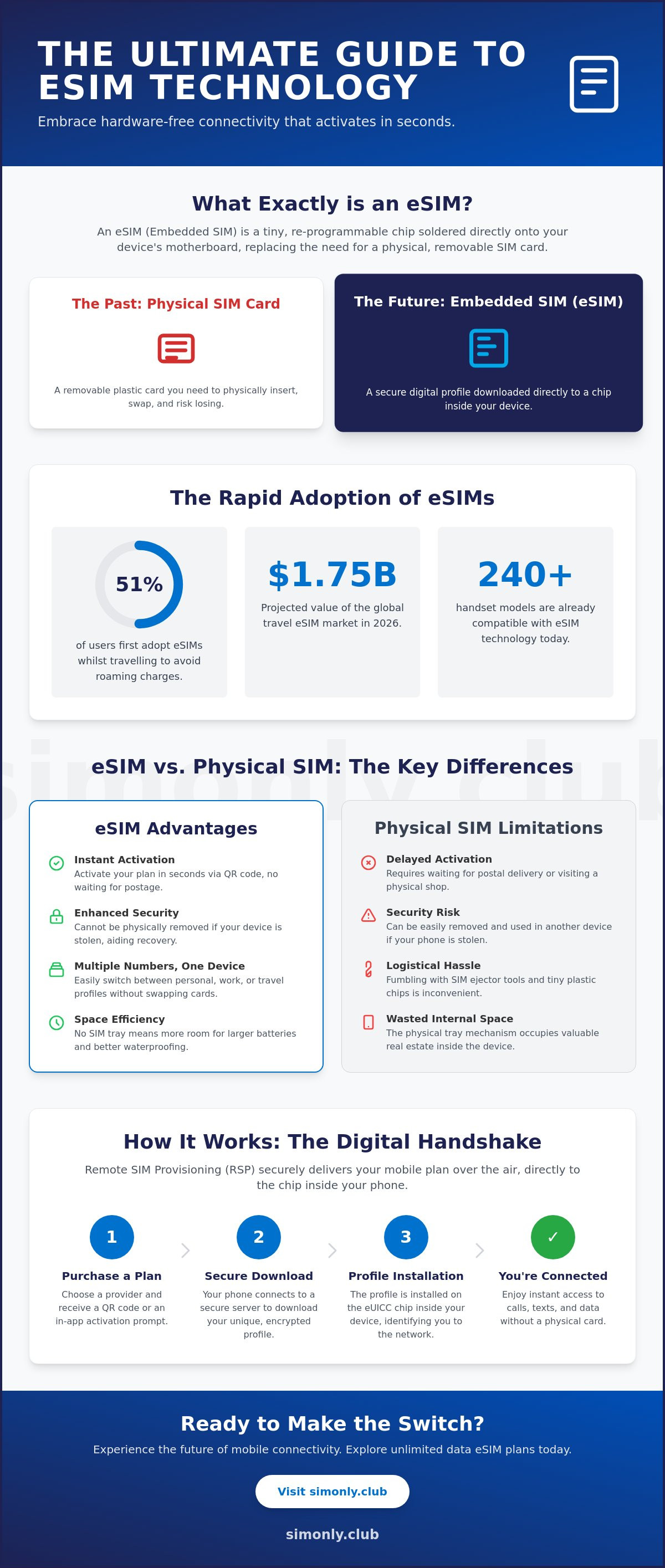
eSIM vs Physical SIM: Which is Better for Your Lifestyle?
Choosing between a traditional plastic card and an embedded chip often comes down to how you value convenience and security. While we have used physical cards for decades, they are inherently fragile and easily misplaced whilst travelling. An internal chip is a permanent fixture of your handset. It eliminates the risk of damaging a gold-plated contact or losing a tiny piece of plastic in an airport lounge. According to the Federal Communications Commission guide on eSIMs, this technology provides significant benefits for reliability and consumer choice.
When users ask how do esims work in a practical daily context, the answer lies in the hardware-free design. Because the chip is integrated into the phone, manufacturers can use the space previously occupied by the SIM tray for larger batteries or advanced cooling systems. This is a massive advantage for high-performance devices in 2026. It allows for sleeker designs without sacrificing the power needed for modern apps and 5G connectivity.
There is also a major environmental win to consider. Removing the need for plastic cards and their bulky packaging significantly reduces waste. When you consider the carbon footprint of shipping millions of plastic chips to UK homes every year, the digital shift becomes an obvious choice for the eco-conscious user. It's a cleaner, more efficient way to stay connected that aligns with modern sustainability goals.
Flexibility is further enhanced by Dual SIM Dual Standby (DSDS) technology. This allows you to have two different plans active at the same time. You can keep your UK number for calls whilst using a separate data plan for international travel. Your phone stays connected to both networks simultaneously, ensuring you never miss an important message regardless of your location.
Security Advantages of Embedded Technology
Security is a standout feature of the electronic SIM. If your phone is stolen, a thief cannot simply "pop out" the SIM card to disconnect the device from the network. The digital profile is tied to your hardware and protected by device-level biometrics like FaceID or fingerprint scanning. This makes remote locking and tracking much more effective, as the device remains online and reachable until you choose to de-activate the profile yourself.
The Freedom to Switch Networks Instantly
The freedom to switch providers is perhaps the most visible benefit for the modern user. You no longer have to wait three days for a card to arrive in the post. You can move between plans in minutes. Many savvy consumers are finding that best esim uk options provide far more flexibility than rigid, old-fashioned contracts. It is about taking control of your connectivity on your own terms, without the hardware bottlenecks of the past.
Step-by-Step: How to Get and Activate an eSIM
The transition from a physical card to a digital profile is designed to be as frictionless as possible. In 2026, you no longer need to wait for the post or visit a retail shop to get connected. The entire process is software-driven, allowing you to move from purchase to active browsing in minutes. Understanding how do esims work in a practical sense means recognising that your phone is already equipped with the necessary hardware; you simply need to provide it with the right digital instructions.
Choosing a digital-only provider like SimOnly Club ensures that you receive your connectivity "keys" instantly. Once you select a plan, your digital profile is delivered via email or a secure app notification. This bypasses the traditional supply chain entirely, offering a modern solution for UK residents and international visitors who value their time. It is a seamless experience that puts you in total control of your mobile identity without any hardware bottlenecks.
Checking Compatibility: Is Your Phone Ready?
Before you commit to a digital plan, you must ensure your handset is amongst the 240+ devices globally that support this technology. Most flagship phones released by 2026, including the iPhone 17 series, are either eSIM-only or prioritise digital slots. To verify your device, navigate to your settings menu and look for an EID (Embedded Identity Document) number. This 32-digit code is the unique serial number for your internal chip. If you see this number, your device is ready for a hardware-free connection. For a comprehensive list of supported handsets, check our e sim uk guide which includes a detailed compatibility checklist.
The 5-Minute Activation Process
Once you have confirmed your device is compatible and you've received your digital profile, the activation itself is a brief, logical sequence. Follow these steps to get online:
- Step 1: Connect to a stable Wi-Fi network. Your device needs an active internet connection to reach the secure server and download your network credentials.
- Step 2: Scan the provided QR code. Open your camera or the "Add eSIM" section in your cellular settings. If you cannot scan the code, you can enter the SM-DP+ address and activation code manually.
- Step 3: Label your new line. Give your plan a clear name, such as "Personal", "Work", or "Travel". This helps you manage multiple numbers on one device without confusion.
- Step 4: Restart your device. Whilst many phones register instantly, a quick restart ensures your handset properly synchronises with the local network towers.
Understanding how do esims work during this setup phase highlights the simplicity of modern mobile tech. If you are ready to ditch the plastic and embrace instant connectivity, you can browse our range of unlimited data eSIM plans and get activated today.
Connectivity Without Boundaries: The Future of SimOnly Club
At SimOnly Club, we've built our service on the belief that connectivity should be instant, transparent, and entirely hardware-free. By focusing exclusively on digital solutions, we've removed the hurdles of traditional mobile networking. We don't believe in making you wait for a delivery driver or visit a high street shop just to get online. When you understand how do esims work, it becomes clear that the old way of managing mobile plans is a relic of the past. Our goal is to act as your knowledgeable guide in this new landscape, providing a more direct and efficient link to the networks you rely on.
Transitioning to a digital-first mobile lifestyle means embracing freedom. It's about moving away from rigid, long-term contracts and plastic waste. Whether you're a local resident or a traveller visiting the UK, the ability to manage your connectivity through software is a game-changer. It simplifies everything from your monthly billing to how you handle international roaming in the US and EU. You're no longer tied to a physical chip; your identity is portable, secure, and ready whenever you are.
Unlimited Data for the Modern User
Data caps often create unnecessary anxiety, especially whilst you're working remotely or navigating an unfamiliar city. We've designed our unlimited data plans to remove these barriers for both UK residents and visitors. Because we've eliminated the costs of physical manufacturing and shipping, digital delivery remains the most cost-effective way to access high-volume data. If you're heading abroad, the process is just as simple. You can add a dedicated US or EU data roaming profile to your device in seconds. This ensures you're connected the moment you touch down, without the fear of unexpected roaming charges on your primary bill.
Joining the Digital Revolution
The digital revolution is about removing the "middleman" of physical retail. SimOnly Club operates without the overheads of traditional shops, allowing us to focus entirely on the quality of your user experience. Our digital profiles are available 24/7, meaning you can get connected at any time of day or night. It's a smart, informed choice for an audience that values speed and modern convenience. By choosing a hardware-free path, you're not just getting a mobile plan; you're joining a community that prioritises digital-first efficiency.
Ready to experience the future of mobile connectivity? Explore our unlimited data eSIM plans for the UK and beyond and start your digital journey today.
Embrace the Future of Hardware-Free Connectivity
The shift to embedded technology is more than just a trend; it's a fundamental change in how we stay connected. By removing the physical SIM tray, you gain a more secure, flexible, and environmentally friendly mobile experience. We've explored the technical side of how do esims work, from the internal eUICC chip to the seamless remote provisioning that happens behind the scenes. This hardware-free approach ensures your device is always ready for the next adventure, whether you're at home in the UK or exploring the USA.
You can now skip the high street queues and the wait for the post. SimOnly Club offers instant digital delivery via email, allowing you to activate a new plan in minutes. There are no hardware contracts to sign and no plastic cards to lose. With unlimited data options for the UK, EU, and USA, you're always in control of your connectivity. Switch to a digital-first lifestyle with a SimOnly Club eSIM today and enjoy the freedom of a truly modern mobile setup. Your journey towards a simpler, smarter connection starts right now.
Frequently Asked Questions
Can I keep my existing phone number if I switch to an eSIM?
Yes, you can absolutely keep your current number when moving to an electronic SIM. The process is identical to switching between physical providers; you simply request a PAC (Porting Authorisation Code) from your old network. Once you provide this to your new digital provider, your number will transfer over to your device's internal chip, allowing you to maintain your contacts and identity whilst enjoying a hardware-free connection.
What happens to my eSIM if I lose or break my mobile phone?
If your device is lost or broken, your mobile identity remains protected because it's tied to your account rather than a removable card. You should contact your provider immediately to deactivate the profile on the missing handset. They can then issue a new digital profile for your replacement phone. This ensures that a thief cannot use your data or number, providing a higher level of security than traditional plastic cards.
Can I use a physical SIM and an eSIM at the same time?
Yes, most modern handsets allow you to use both simultaneously through Dual SIM Dual Standby (DSDS) technology. This is a perfect solution for keeping a local UK number active whilst using a separate digital profile for international travel or business. You can manage which line is used for data and which is for calls directly through your phone settings, giving you total control over your mobile connectivity.
Do eSIMs use more battery life than traditional SIM cards?
No, an eSIM doesn't consume more battery life than a standard plastic SIM. In fact, because the chip is integrated directly into the motherboard, the communication between the device and the network is highly optimised. You won't notice any difference in your daily battery performance. Manufacturers often use the space saved by removing the physical tray to include slightly larger batteries, which can actually improve your overall device longevity.
How many different eSIM profiles can I store on my device?
Most 2026 devices allow you to store between five and ten different profiles, although you can typically only have one or two active at once. This capacity is incredibly useful for frequent travellers who move between the UK, EU, and USA. You can simply toggle between stored profiles in your settings menu without ever needing to swap hardware, making it the most efficient way to manage multiple network subscriptions.
Is an eSIM more secure than a standard plastic SIM card?
An eSIM is significantly more secure than a traditional plastic card. Because the chip is embedded, it cannot be physically removed if your phone is stolen, which prevents thieves from instantly disconnecting your device from tracking services. To understand how do esims work in terms of security, you should view them as a digital vault. Your profile is protected by your phone's biometrics, ensuring your mobile identity remains amongst your most secure assets.
Can I move my eSIM profile from an old phone to a new one?
Yes, you can transfer your digital profile to a new device, but the process is digital rather than physical. Instead of moving a card, you'll typically deactivate the profile on your old handset and scan a new activation code on the new one. Some manufacturers now offer direct device-to-device transfers during the initial setup. This modern approach ensures your transition is seamless and removes the risk of damaging a fragile plastic chip during the move.
Do I need an internet connection to activate my new eSIM?
Yes, a stable Wi-Fi connection is essential for the initial activation process. Your device needs to communicate with the network's secure server to download your encrypted profile via Remote SIM Provisioning. Once the download is complete and the handshake is finalised, you won't need Wi-Fi to use your mobile data. The internet connection is simply the bridge that brings your new digital identity from the provider directly to your phone's internal chip.